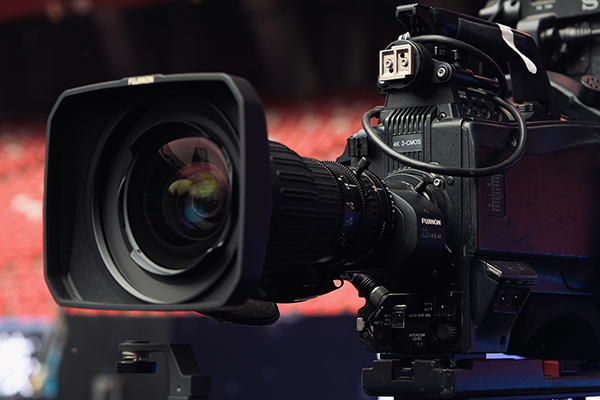



Discover how the FUJINON UA22x4.8 delivers greater shooting flexibility and opens up new creative possibilities for live event production through testing at Beijing National Stadium.
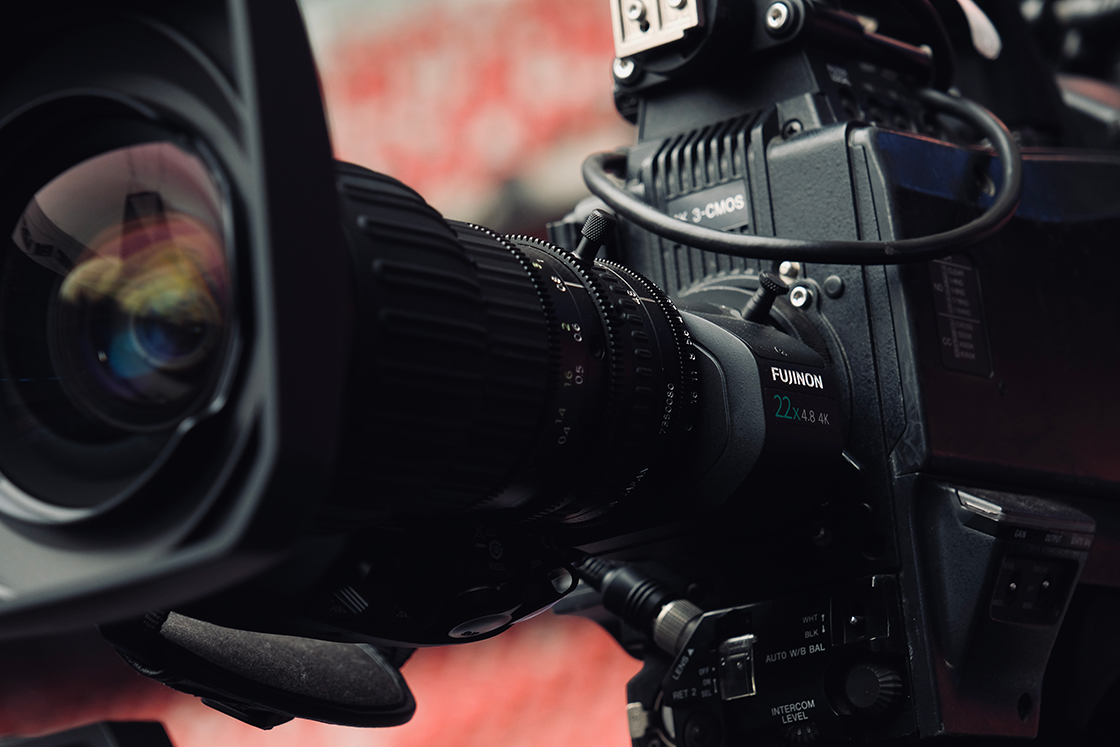
When we first learned about the FUJINON UA22x4.8BERD lens, we were attracted by its combination of a 4.8mm wide-angle focal length and a 22x zoom range. In our previous routine productions, we typically used wide-angle lenses and standard lenses on two different camera setups. As a result, the effective shots and visual effects each camera could contribute were limited by the focal length range, and the variation in framing was relatively fixed. Compared to these two types of lenses, standard lenses lack the stretching and exaggerated visual effects of wide-angle lenses, while wide-angle lenses miss the compression of depth and changes in depth of field that standard lenses provide.
The FUJINON UA22x4.8BERD fuses the optical advantages of wide-angle and standard lenses, breaking the traditional barrier of focal length. It offers a 90-degree horizontal field of view and 22x magnification, with a focal length range from 4.8mm to 106mm. When using the 2x extender, it can reach 212mm. From the technical specifications, this lens can capture visually impactful wide-angle shots while also shooting tighter framing as needed. It combines the shooting advantages of both wide-angle and standard lenses in a single lens.
The test environment was The Bird’s Nest stadium, with the stage covering the entire inner field. In such a super-large venue, factors like the large stage span and long camera setup distances are important considerations in camera placement design. For this project, we mounted this lens on a 2D cable cam (flying cat), a camera dolly, and a wide-angle camera setup. These positions were all at least 30 meters away from the main performance area and performers, so the demand for mid-to-long focal lengths was more significant than for wide-angle. During use, we focused on the zoom range coverage, smoothness of zooming, and consistency of light transmission across different focal lengths. Simply put, we tested “what framing can be captured and whether the long-distance zoom is smooth enough.” In this test, the lens met our needs well. It could capture panoramic shots of large spaces from a distance while also covering small wide shots and even medium close-ups of performers, providing the director with more creative and effective shot options. Therefore, this lens is highly practical for large-scale venues like this test environment.
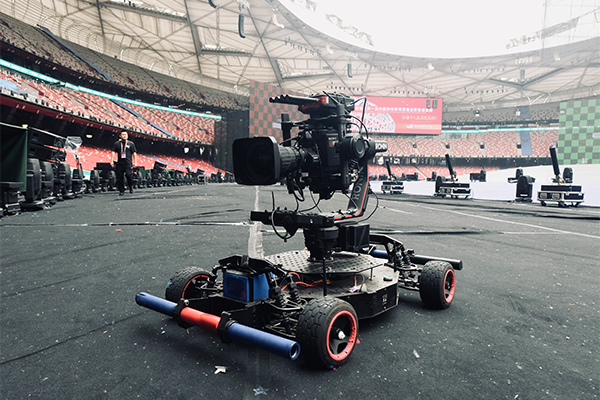
Camera Dolly
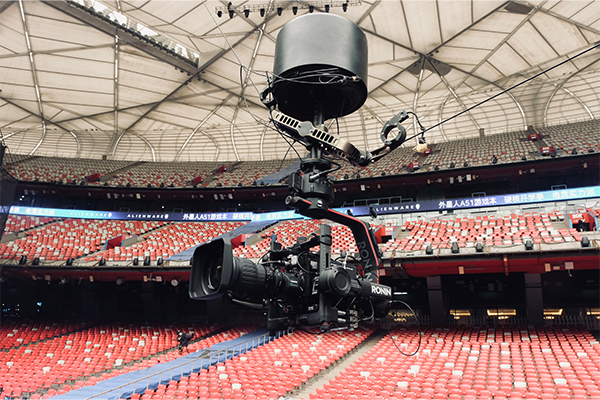
2D Cablecam (Flying Cat)
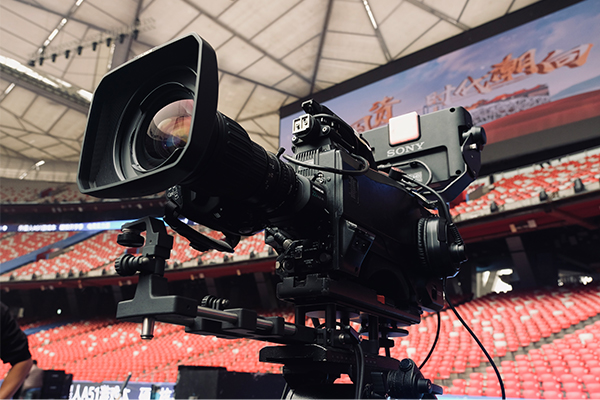
Wide-Angle Camera Setup
At the same time, we further explored artistic creation possibilities, aiming to discover new visual effects and audiovisual language potentials that this new lens offers by breaking the physical limitations of traditional lens design.
First, this lens enables large-range continuous framing changes. In this project, the 2D cablecam and camera dollyr were positioned far from the stage, yet the lens allowed a continuous zoom from a highly dynamic wide stage shot to a full or medium close-up of the performer. Using a long lens to transition from the full stage view to the subject’s close-up strengthened the unity of time and space, making the audiovisual experience more immersive. The director used this lens to design multiple shots with the 2D cablecam, flying from a distant wide shot to a medium close-up of the performer and then zooming back out to a wide shot. This large-range framing change actively guided the audience’s focus and perfectly integrated the live lighting, stage design, and performers’ actions, enhancing the emotional impact of different song sections and deepening the immersive and emotional audiovisual experience. This was not achievable with conventional wide-angle or standard lenses and was a delightful surprise brought by this lens.
Second, this lens brings changes in the sense of speed and space. In this project, the 2D cablecam’s flight path was parallel to the four-sided stage and positioned far away. Using this lens, it was possible to capture the stage’s wide scenic design while also shooting medium close-ups of performers with the telephoto end. Combined with the cablecam’s movement, this created a visual effect of telephoto compression plus circular motion. On one hand, it compressed the vertical space between the performers and the background audience (the glow stick area). On the other hand, the circular motion created a significant speed difference between the subject and the background glow sticks, greatly enhancing the visual impact. Depth of field control highlighted the subject while improving overall image quality. Matching the circular motion speed, for example, in the chorus of the song “Three Lives, Three Worlds,” the director used the cable cam’s telephoto lens to shoot medium close-ups of the performer with slow circular motion. The compressed vertical space and speed difference between the performer and the glow sticks emphasized the song’s themes of irresistible fate and the strong belief in pursuing love. This lens created new possibilities and choices for the director in audiovisual language expression.
During actual camera operation on site, this lens maintained Fujinon’s characteristic “responsive” electric servo control, allowing excellent control and adjustment of zoom speed. Although the wide-angle end is 4.8mm, which slightly reduces the breadth of the image edges, it also somewhat improves edge aberrations. Visually, the image quality showed good consistency from center to edge and from wide-angle to telephoto. The minimum focusing distance of 0.4m across the entire zoom range also provided more convenience and creative possibilities. Possibly due to the increased zoom ratio, the lens is slightly longer than typical wide-angle lenses but still maintains good weight distribution. There was no noticeable impact on mounting on special equipment or in daily use scenarios.
In summary, the FUJINON UA22x4.8BERD boldly breaks traditional boundaries while maintaining excellent product quality. It brings higher shooting efficiency to on-site production teams and enriches artistic creation methods. Under different production conditions and environments, this lens’s practical value and artistic potential are worthy of further in-depth exploration.
