



![[icon] Healthcare IT](https://asset.fujifilm.com/www/th/files/2024-08/56680c6fdbf34936593e85134920c43a/healthcare-it.svg)
![[icon] X-ray](https://asset.fujifilm.com/www/th/files/2024-08/7526d1101b64112bf22b55db55efaa57/x-ray.svg)
![[icon] Ultrasound](https://asset.fujifilm.com/www/th/files/2024-08/1dda2d2eb91f3c86fa66f03f9c819a82/ultrasound.svg)
![[icon] Endoscopy](https://asset.fujifilm.com/www/th/files/2024-08/05f6b3f71db56279cab3348b30a4ba0b/endoscopy.svg)
![[icon] In Vitro Diagnostics](https://asset.fujifilm.com/www/th/files/2024-08/9e91ed0a102839a6882a0de74d502cee/ivd.svg)
![[icon] Veterinary Medicine](https://asset.fujifilm.com/www/th/files/2024-08/6a151464d073132ebaf32502ba57c4df/veterinary.svg)
![[icon] MRI and CT](https://asset.fujifilm.com/www/th/files/2024-08/0bb04b1be5a01844c53173c0ccabe874/mri-and-ct.svg)
![[icon] Inkjet Solutions](https://asset.fujifilm.com/www/th/files/2024-08/73d9b8524c59e74c542df1f23c4f07ce/inkjet-solutions.svg)
![[icon] Office Solutions](https://asset.fujifilm.com/www/th/files/2024-08/5b47599c8e70a8fe60ffa0a98c41a514/office.svg)
![[icon] Graphic Arts & Printing](https://asset.fujifilm.com/www/th/files/2024-08/b7dca46beab06d8bdac1897bd5621c06/graphic.svg)
![[icon] Photofinishing Products](https://asset.fujifilm.com/www/th/files/2024-08/7ae7e1b29f74fc1b562542b0d7c87b2e/photofinishing.svg)
![[icon] Optical Devices](https://asset.fujifilm.com/www/th/files/2024-08/a6203f1389ec8eb7ee25055419384f25/optical-devices.svg)
![[icon] Cine & Broadcast Products](https://asset.fujifilm.com/www/th/files/2024-08/8d74351df62db4d1d4b9779ce282e709/film-and-broadcast.svg)
![[icon] Security Protections](https://asset.fujifilm.com/www/th/files/2024-08/020de2cfc6945ce00c20063e32463c2c/security.svg)
![[icon] Manufacturing Process](https://asset.fujifilm.com/www/th/files/2024-08/d84916c806eb5d08efbaa4fce95c9d15/manufacturing-process.svg)
![[icon] Inspectional Products](https://asset.fujifilm.com/www/th/files/2024-08/7a66c0f5baac60152d24f069082a63fa/inspection.svg)
![[icon] Data Management](https://asset.fujifilm.com/www/th/files/2024-08/301ac4f37d11d528a63fd6f7d050d817/data-management.svg)
![[icon] Materials](https://asset.fujifilm.com/www/th/files/2024-08/163c2f189d153cf287f7f0bcf783864c/materials.svg)


Kalasin, Thailand, 16 July 2026 — FUJIFILM (Thailand) Ltd., in collaboration with the Thailand Hepatitis Alliance and the Office of Disease Prevention and Control Region 7, Khon Kaen, together with medical teams from three hospitals in Kalasin Province, namely Khaowong Hospital, Huai Phung Hospital, and Na Khu Hospital, organized a proactive liver cancer screening activity for 200 high-risk individuals at Khaowong District Office, Kalasin Province, to support early-stage liver cancer detection through the GALAD Score. The Score integrates three HCC biomarkers — AFP, PIVKA-II, and AFP-L3 — together with patient age and gender data to improve the accuracy of hepatocellular carcinoma (HCC) detection and increase patients' opportunity for timely treatment.
Liver cancer remains one of Thailand's most pressing public health concerns. According to the latest data from Thailand's National Cancer Institute, liver cancer and bile duct cancer are the most commonly diagnosed cancer in the country and a leading cause of cancer death. Cases number as many as 19,491 annually, equivalent to 53 a day, with 14,971 deaths annually, or 41 a day. Liver cancer typically presents no symptoms in its early stages, so many patients seek treatment only once the disease has progressed, narrowing treatment options and reducing survival rates.
Prof. Dr. Wattana Sukeepaisarnjaroen, Gastrointestinal unit, Department of Medicine, Srinagarind Hospital, Faculty of Medicine, Khon Kaen University, and President of Thailand Hepatitis Alliance, said, “Liver cancer incidence continues to rise, particularly in the Northeast, where rates are highest due to the region's high prevalence of hepatitis B and C infection. A significant number of patients remain unaware of their infection status, meaning they miss out on proper monitoring and care. Thailand Hepatitis Alliance's mission is to build awareness, promote prevention, and reduce hepatitis incidence in the Northeast. That is why we have partnered with Fujifilm to adopt the GALAD Score, a new biomarker approach used alongside ultrasound to detect liver cancer more efficiently and accurately at its earliest, symptom-free stage, when patients have a better chance of accessing effective treatment.”
Kalasin Province is another key area for liver disease surveillance. Epidemiological data examining liver and bile duct cancer in the region, published in KKU Journal for Public Health Research, found that its incidence rate between 2019 and 2023 averaged approximately 16.32 cases per 100,000 population per year, with a significantly higher incidence among male patients. Cases were also found to cluster in several areas across the province, underscoring the need for greater access to proactive screening services in the community.
Dr. Jira Saksasitorn, Deputy Director of the Office of Disease Prevention and Control Region 7, Khon Kaen, said, “Khaowong District in Kalasin Province has a relatively high prevalence of hepatitis B and C infection, with some cases also involving cirrhosis, which is a key risk factor for liver cancer. Building community awareness and conducting proactive screening are therefore essential mechanisms for increasing the chances of early detection, ensuring patients are referred for timely treatment, and reducing losses from liver cancer in the long term.”
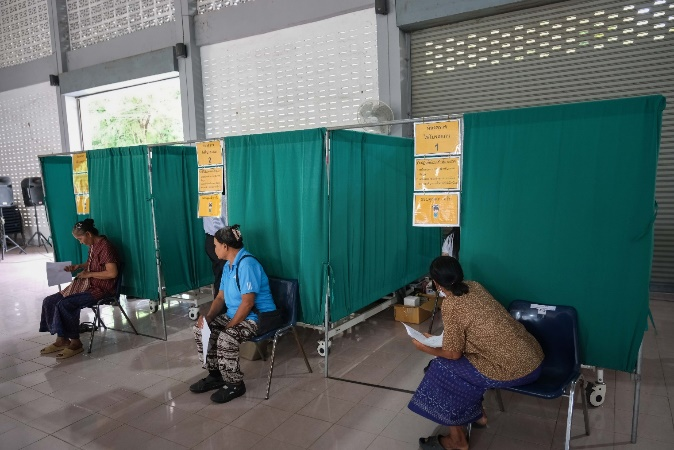
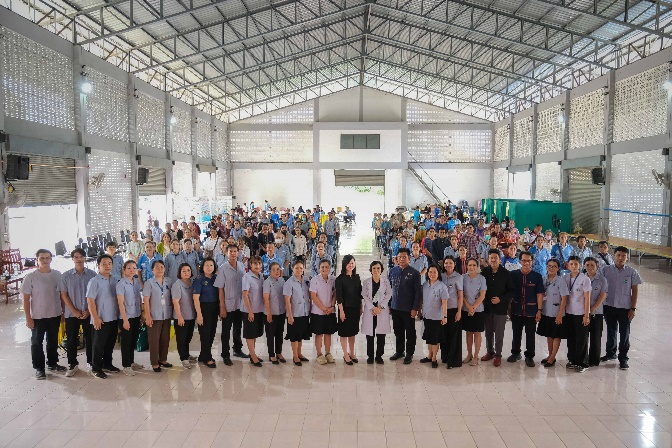
This liver cancer screening activity in Kalasin Province builds on the success of the pilot liver cancer screening project conducted in the Northeast in Nong Khai Province in late 2025. In this latest round of HCC screening using the GALAD Score, 14 abnormal cases were identified among the 200 individuals screened, a group comprising hepatitis B and C carriers as well as cirrhosis patients. These cases were then referred effectively into the medical care system. This reflects the potential of proactive screening to help identify patients at an early stage before the disease progresses.
Mr. So Maruo, Managing Director of FUJIFILM (Thailand) Ltd., said, “Fujifilm is committed to bringing effective medical innovations to support the healthcare of Thai people in every region, particularly in remote communities where access to screening services remains a challenge. We are honored to collaborate with public health agencies, government bodies, and medical personnel to help everyone recognize the importance of early-stage screening, and to elevate the quality of life and health of people across Thai society. This reflects Fujifilm Group’s purpose of 'Giving our world more smiles.'”