










As organisations increasingly move towards digital-first operations, the logistics sector continues to depend on printed documents – and by extension, the machines that print them.
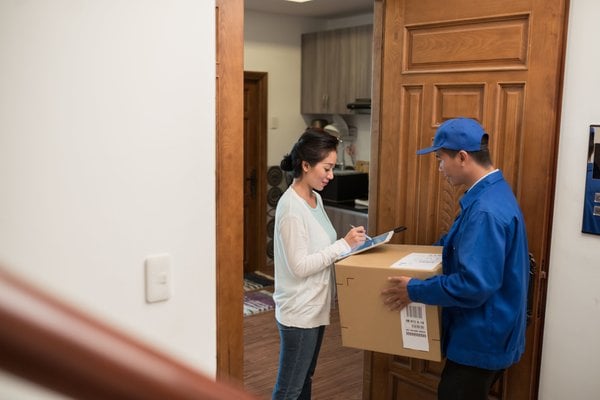
Paper documents dominate the $25 trillion global cargo trade, with four billion circulating at any given time. Invoices, customs documents, paper-based bills of lading and scannable shipping labels and barcodes all do their part to keep goods moving through the supply chain.
Digital documentation accounts for only 2% of global trade transactions, and it’s not likely to change while regulatory barriers prevent full digitalisation in major shipping markets.
This reliance on paper leaves logistics companies at a crossroads. The benefits of adopting a digital workplace are already clear: according to the New Zealand Institute of Economic Research, shifting to paperless trade could reduce logistics costs by between 15% and 45%, “depending on the degree of automation already completed.”
But the reality on the ground is more complicated.
Aside from the regulatory barriers, most logistics and supply chain organisations lack the resources to digitalise, as a recent Wisetech Global survey covering Asia Pacific, Europe and the other regions found.
Concerns about added complexity and the upfront cost of new workplace technology continue to weigh heavily on shipping companies, slowing the transition from long-standing paper processes. But what if there was a middle ground where logistics companies can deploy and scale digital solutions at their own pace – helping bridge the gap from paper-based processes?
Smart, connected printers with artificial intelligence printing automation provide that missing link: helping logistics players tackle legacy inefficiencies and close the digitalisation gap that has held them back for too long.
Consider bills of lading (BLs), one element of logistics paperwork. Electronic bills of lading (eBL) already exist – if more widely adopted, they could remove the delays incurred by paper BLs, which take an average of 16.4 hours to process for every shipment.
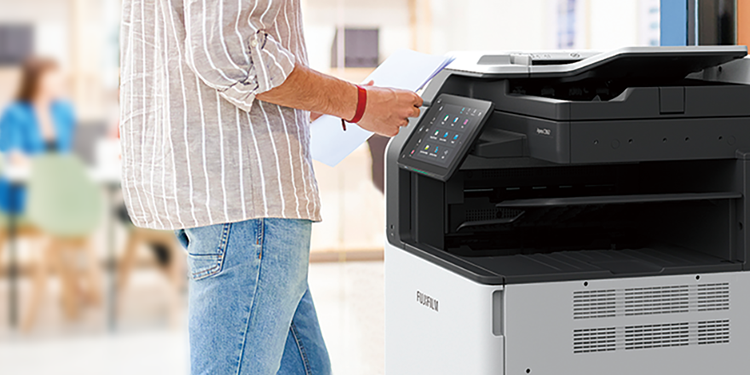
As of end-2021, only 1.2% of the 45 million BLs issued by ocean carriers were electronic. Momentum could build soon – global shipping company Hapag-Lloyd plans to convert 100% of its original bill of lading activities to digital by 2030, pressuring competing logistics companies to follow suit. Multifunction printers linked to digital cloud platforms like FUJIFILM IWpro can automate the capture of bills of lading from scans, emails or uploads. The system automates document processing in the cloud – you can scan paper documents or capture email attachments automatically and the platform takes care of the rest:
- Generative AI-enhanced Optical Character Recognition (OCR) can convert paper-based estimates, purchase orders, delivery notes or invoices into structured digital data – ready for direct import into sales or accounting systems without additional processing or editing.
- The system can automatically save files in an organised structure (by invoice number, for instance), making them easier to manage.
- Integrated AI drives automation of tasks like scanning, renaming and sorting – significantly reducing time spent on document handling and eliminating errors caused by manual processes.
No more wasted hours manually typing in details like consignee, vessel number and port of discharge into a paper bill of lading. With cloud-connected, automated document management systems, you can export these details right into an electronic bill of lading, reducing errors and speeding up customs clearance.
Printers keep supply chains moving, but unexpected breakdowns can halt operations if not addressed immediately.
Today’s AI-enabled printing automation comes with predictive maintenance that spots potential issues before they cause downtime. Usage data and sensor readings let the system schedule servicing in advance, keeping machines running when you need them the most. The result: less downtime, longer equipment life and fewer surprises.
Platforms like FUJIFILM IWpro offer Centralised Printer Management as a feature. Admins can remotely monitor and manage printers’ usage status from a web browser, cutting admin work and lowering overall costs.
Traditional document workflows were not designed for today’s interconnected, multi-country supply chains. An export team in Manila, a compliance unit in Singapore and agents on the ground in Bangkok may all need to review the same invoice – passing the document back and forth across their different time zones only slows things down and makes collaboration more difficult than it needs to be.
By centralising logistics data in the cloud, modern enterprise content management systems remove these barriers and create a single source of truth.
FUJIFILM IWpro‘s “Workspace” gives teams a shared space to store and review documents together. Everyone can access the same screen anytime, anywhere: improving coordination across borders and ensuring information stays accurate and up to date.
Advanced search tools make it simple to find what you need, whether by client name, date, assigned person or even text captured from images. Having a single collaborative hub helps global teams work more efficiently, reduce miscommunication and keep everyone aligned.
FUJIFILM IWpro gives logistics businesses a practical first step into digitalisation: one that’s scalable, low-barrier and easy for teams to adopt.
In an era shaped by AI, logistics firms don’t have to choose between a paper-based or digital workplace. All-in-one business digitisation solutions like FUJIFILM IWpro provide a balanced path forward: bridging paper with digital, legacy processes with modern systems and complexity with clarity.
Contact us today to learn how our printers and software can help your team digitise your operations at your own pace.