






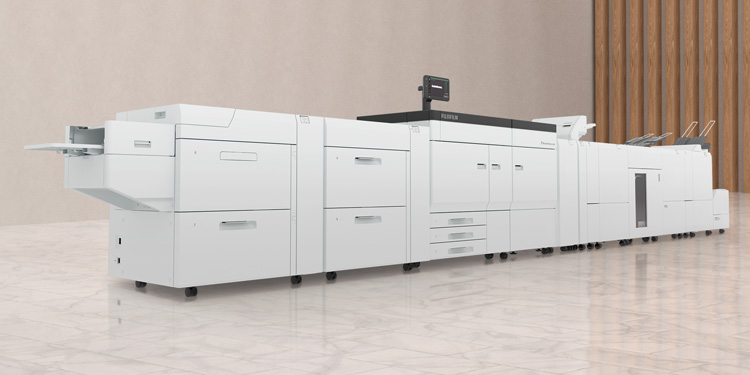







Gartner defines managed print services (MPS) as "a service offered by an external provider to take primary responsibility for an enterprise's entire document output and print infrastructure." In plain terms, a provider takes over the day-to-day running of your printers and multifunction devices. This includes supplying toner, monitoring hardware health, dispatching engineers when required and creating reports on what your office is printing.
That is a different relationship from simply renting a printer or calling a technician when something goes wrong. With a break-fix model, the admin burden stays with you. With MPS, the provider holds that responsibility contractually, which changes both the economics and the experience of managing print in a small office.
For a Small and Medium Business (SMB) in Singapore, the practical outcomes typically include:
- More predictable monthly costs
- Less unplanned downtime
- Better visibility into who is printing what
- Fewer hours spent chasing toner or waiting for a service call
Most MPS contracts cover several distinct components, though the exact scope varies by provider and pricing tier.
Print environment assessment. Before any device is installed, the provider conducts a review of your current fleet: how many devices you have, where they are located, meter readings, driver configurations and volume patterns by department. This baseline determines what the right solution looks like.
Device provisioning and consolidation. Based on the assessment, the provider recommends a device fleet sized to your actual demand. For many small offices, this means fewer, better-placed multifunction printers rather than a printer at every desk. Correct placement reduces unnecessary walking time and often cuts total device costs.
Supplies and toner management. Rather than waiting until toner runs out, MPS uses automated monitoring to trigger replenishment before a device runs dry. The practical effect is fewer print disruptions caused by empty cartridges.
Remote monitoring and troubleshooting. Monitoring agents installed on devices continuously transmit status signals: error codes, toner levels, page counts and hardware alerts. When a threshold is crossed, an alert fires at the provider's service desk. Many issues (firmware errors, print queue problems, driver conflicts) can be resolved remotely without waiting for an engineer.
Onsite maintenance and repairs. When a hardware fault cannot be fixed remotely, a technician is dispatched. Well-structured contracts distinguish between reactive repairs (responding to a fault) and proactive maintenance visits (routine servicing to prevent faults).
Reporting. Providers compile usage data into periodic reports, typically monthly or quarterly. Standard metrics include total page volumes, colour versus black and white ratios, device utilisation rates and service KPIs such as response times and uptime percentages. This data is directly useful for cost allocation and for spotting waste.
Security and authentication. Access controls limit which users can print, copy or scan on which devices. Secure print release (often called Follow-You or pull printing) holds a job in a queue until the user authenticates at the device, usually via a card, PIN or mobile credential. This prevents sensitive documents sitting uncollected in an output tray. Audit logs record who printed what and when, which is relevant for compliance and data governance.
FUJIFILM Business Innovation Singapore delivers its managed print services through MPS Guardia—an end-to-end offering that helps organisations optimise their print environment, manage costs, minimise downtime and strengthen document security
It follows a three-phase structure: Print Environment Assessment, Implementation and Optimisation and Ongoing Management and Support. In practice, a well-run onboarding for a small office typically moves through seven steps.
- Discovery and baseline. Review the current device fleet, monthly print volumes, recurring issues and IT requirements. Define clear objectives and measures of success before planning begins.
- Solution planning. Develop a right-sized plan covering device placement, replacement or consolidation, authentication requirements and the proposed service scope.
- Provisioning and installation. Deliver and connect the approved devices, then configure drivers, print queues and authentication settings according to the agreed plan.
- Monitoring and supplies setup. Connect eligible devices to the monitoring system. Set alert and replenishment thresholds based on expected usage and agreed service arrangements.
- Testing and validation. Check printing, scanning, authentication and reporting functions before launch. Resolve identified issues and confirm readiness with key users.
- Go-live and user guidance. Introduce the new setup and explain any changed workflows. Confirm administrative contacts, support channels and escalation procedures.
- Ongoing review. Review usage, device performance and service outcomes at agreed intervals. Adjust the setup or service scope when business needs change.
The data flow for FUJIFILM Business Innovation MPS Guardia works like this: each device enrolled with EP-BB continuously sends status signals to a monitoring agent, which forwards them to FB Direct, our service platform. The FB Direct platform applies rules, and when a condition is met (toner below 15%, a specific error code, an unusually high fault rate), an alert is generated.
For toner, this typically means a replacement cartridge is shipped before the current one is exhausted, so it is waiting on-site when the swap is needed. For hardware alerts, the service desk reviews the error code and either resolves it remotely or schedules a technician visit.
From a reporting perspective, you receive a regular summary that covers page volumes, device health, colour-to-mono mix and service response records. This data lets you track whether your print costs are in line with the contracted rate and flag unusual usage patterns, such as a spike in colour printing or a device that is generating repeated faults.
Security events can also surface in these reports. If your contract includes authentication logging, the report can show access by user or department, which is useful if you are managing compliance obligations.
Knowing how MPS is typically priced helps you evaluate whether a contract is genuinely good value for your office.

CPP pricing links your monthly fee to a predicted print volume. You commit to a minimum number of pages per month; the provider such as FUJIFILM Business Innovation calculates a rate per page, and your bill is based on actual pages printed (or the committed minimum, whichever is higher).
This model gives the provider revenue predictability and gives you a per-page cost you can track. The risk for small offices is committing to a volume higher than your actual usage.

A fixed monthly fee covers a defined set of devices, typically including supplies, maintenance and monitoring. Variable charges apply for usage above certain thresholds. This model is often simpler to budget for, though the fixed fee may feel high in low-usage months.

Some contracts combine a base subscription covering hardware and standard maintenance with add-on services billed separately, such as workflow software, advanced security features or cloud print integration. These suit offices whose needs are evolving or that want to start with a core service and extend later.
Regardless of which model a provider offers, there are four things worth verifying before signing:
- what the SLA response time is for onsite repairs
- whether toner and consumables are fully included or capped at a volume
- how averages are calculated and billed
- precisely how "pages" are defined (A4 mono, A3 colour and duplex pages are often counted differently).
For small offices in Singapore evaluating MPS options, providers such as FUJIFILM Business Innovation offer managed print arrangements that span device supply, remote monitoring and ongoing support. We also have the ability to connect print infrastructure to broader workflow and cloud services as needs grow. The value of any MPS Guardia contract, though, sits primarily in the contract terms and the provider's service capability, not just the hardware.
If your office prints irregularly, has very low monthly volumes or has a single device with no compliance requirements, the overhead of an MPS contract may not justify itself. If you need help deciding if MPS is for you, contact us today!