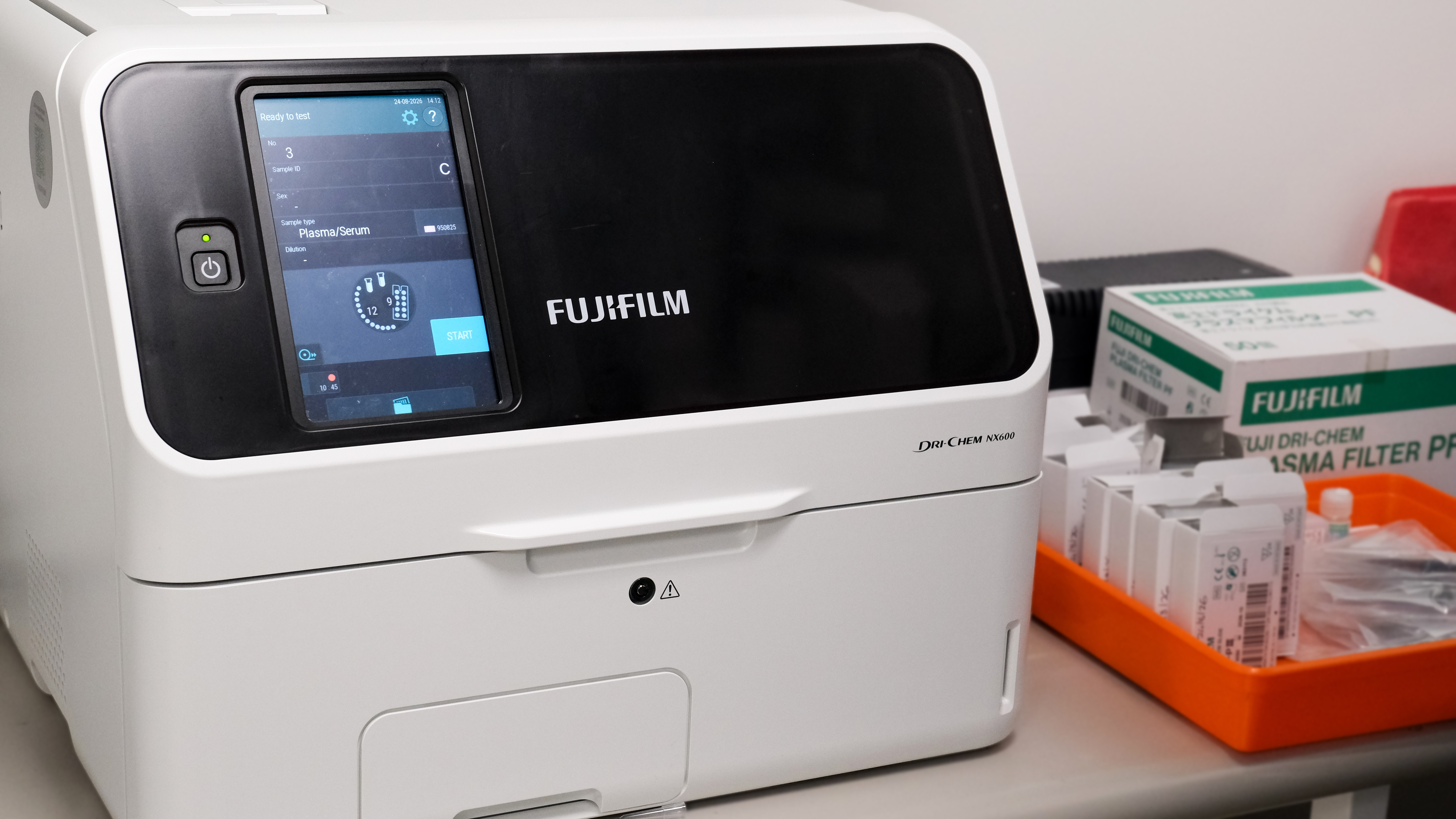



- The Fujifilm DRI-CHEM NX600 analyser has led to a significant decrease in blood test waiting times, increased capacity within the CAU at St Bartholomew’s Hospital, and a reduction in the number of referrals to A&E to continue care outside of CAU hours
- Vital blood test waiting times have been reduced from 4-6 hours to just 10-15 minutes for patients receiving treatment for cancer
- This is the first installation of Fujifilm’s IVD analyser technology directly within cancer care units in the NHS – allowing clinical decisions to be made faster
Bedford, United Kingdom, August 25, 2026 – The first Fujifilm DRI-CHEM NX600 analyser has been installed at St Bartholomew’s Hospital in London under Barts Health NHS Trust, within the Cancer Assessment Unit (CAU) – a purpose-built facility for cancer patients who become unwell during their treatment. This is the first installation of its kind into an NHS Oncology Department, enabling the CAU to run bloods within the unit, and reducing reliance on busy hospital laboratories for testing.
Training and installation began in November-December 2025, and since then, the single-specimen Fujifilm DRI-CHEM NX600 analyser has become a core part of the CAU’s team workflow. The analyser allows the CAU team to run bloods within the unit, enabling clinical decisions to be made faster in the CAU, improving overall patient experience, and leading to a reduction in the number of A&E referrals where patients would previously have needed to attend for continued care outside of CAU hours.
Previous workflows within the CAU at St Bartholomew’s Hospital saw blood samples sent to nearby Royal London Hospital for testing, resulting in patients waiting for extended periods of time for results. The Fujifilm DRI-CHEM NX600 analyser is now primarily being used at St Bartholomew’s Hospital to provide faster blood tests on-site in the CAU to test liver function, renal function, CRP, calcium and magnesium, with wait times reduced from 4-6 hours to just 10-15 minutes for all vital blood tests.
Nic Lawrence, Senior Charge Nurse at St Bartholomew’s Hospital Cancer Assessment Unit (CAU), said: “Since the introduction of the Fujifilm DRI-CHEM NX600 point-of-care testing within the Cancer Assessment Unit (CAU), we have seen a significant improvement in the speed and efficiency of patient assessments. This has improved patient flow throughout the unit, shortened turnaround times and reduced waiting times for patients.
“Most importantly, earlier clinical decision-making means patients receive the right treatment sooner, leading to improved patient outcomes, a reduction in long waiting times for formal bloods to be processed, and a more responsive acute oncology service.”
The introduction of the Fujifilm DRI-CHEM NX600 analyser has already enabled the CAU to see nearly 50 additional cancer patients per month, strengthening the team’s capacity to deliver high-quality care. Between October 2025 and July 2026, the CAU saw a total of 2,717 patients, an average of approximately 272 patients per month – compared with 2,242 patients during the same period the previous year, an average of 224 patients per month. This represents a 21% increase in monthly patient numbers, demonstrating a notable increase in the CAU’s capacity and the importance of point-of-care testing directly in the Oncology Department.
Louise Smith, General Manager for Cancer Service at St Bartholomew’s Hospital said: “Faster access to results enables earlier clinical decision-making, helping patients who require admission reach an inpatient bed sooner, while those safe to discharge can return home quicker. This has also reduced the number of patients waiting on the unit at any one time, creating a calmer environment, reducing overcrowding, and improving the overall patient experience.”
Patient X, treated within the Cancer Assessment Unit (CAU) said: “Having my blood results back so quickly made a huge difference. I’ve been on the CAU before and waited four hours for the bloods to come back. This time, I didn’t have to wait around for hours, and the nurses and doctors were able to explain what was happening and start my treatment sooner. It made me feel reassured and looked after, and my visit to the unit was much quicker.”
With 40 years’ global experience in in-vitro diagnostics, Fujifilm’s heritage in optical technologies guides the DRI-CHEM NX600’s ability to detect subtle colour and signal changes, producing accurate routine blood chemistry results. Fujifilm’s biochemistry expertise, originally applied to photographic film chemistry, has seen the company develop a wide portfolio of DRI-CHEM testing.
The same focus on usability and workflow that has shaped Fujifilm’s imaging systems has been applied to the DRI-CHEM NX600, resulting in a compact, intuitive analyser designed for busy, space-constrained clinical settings – with a simple three-step operation ensuring a user-friendly process and ability to process up to 128 tests per hour.
Michael John Devlin, Clinical Director of Cancer Assessment Unit (CAU) and Acute Oncology Service said: “The DRI-CHEM NX600 analyser will help improve the patient journey by significantly reducing blood test waiting times, ensuring patients receive the correct intervention in a timely manner. This means we can see even more patients in the unit, which is great for our patients but also for parallel services such as A&E, where patients would otherwise be sent.”
Allan Elborn, Managing Director at Fujifilm Healthcare UK said: “For more than 30 years working with the NHS, Fujifilm’s diagnostic technologies have supported detection and treatment, and these incredible improvements at St Bartholomew’s Hospital showcase the power of rapid detection technologies. Bringing testing into the CAU keeps patients where they should be and in a familiar environment for their care, rather than transferring them to busy A&E departments. We’re pleased to work with St Barts Hospital on this patient-focused initiative, and look forward to continuing our partnership to deliver against our shared goals for better patient outcomes.”
Fujifilm Healthcare UK are continuing to implement their IVD technologies in a variety of healthcare settings across the UK. Currently, Fujifilm Healthcare UK has over 100 systems installed in the UK in settings such as Chemotherapy Day Units, cancer research, drug development, private health sector including GP’s, Urgent Treatment Centres, Premiership Football clubs and Sports Science research. Since the release of the NHS 10-Year Plan, Fujifilm Healthcare UK has seen increased interest from healthcare providers in the near-patient testing model, which will continue to be used within the CAU at St Bartholomew’s Hospital.
Rhiannon James Head of Corporate Communications Fujifilm UK rhiannon.james@fujifilm.com
As a leader in diagnostic imaging and key partner to the UK healthcare system and NHS, Fujifilm Healthcare UK is at the heart of innovative technologies supporting diagnosis as early as possible. Based on a 90-year global history of innovation, Fujifilm is proud to support healthcare systems across the UK, including the NHS, to deliver the best possible outcomes for patients for over 30 years, providing patient-centric diagnostic solutions and innovative treatments for long-term conditions such as cancer. https://fujifilmhealthcare.co.uk/
Claire O’Rourke Business Unit Manager – IVD Fujifilm Healthcare UK welcome_hcuk@fujifilm.com claire.orourke@fujifilm.com
With a turnover of £2.5billion and a workforce of over 20,000 people, Barts Health is a leading healthcare provider in Britain and one of the largest NHS trusts in the country. The Trust’s five hospitals – St Bartholomew’s Hospital in the City, The Royal London Hospital in Whitechapel, Newham Hospital in Plaistow, Whipps Cross Hospital in Leytonstone and Mile End Hospital – deliver high quality compassionate care to the 2.5 million people of east London and beyond, including delivering over 14,000 babies every year and treating more than 7,000 patients daily.