


The Fujifilm Group is committed to contributing to the sustainable development of society, working together with local communities as a good corporate citizen and responding sincerely to the demands and expectations of those communities. In 2008 we formulated the Fujifilm Group Social Contribution Policy. Based on the Policy, we are conducting activities focusing on the fields of education and research, culture, arts and sports, health and environment. We value cooperation and collaboration with local communities, institutions, NPO/NGOs, and others and contribution by employees’ voluntary activities.
Fujifilm has always paid attention and protected the environment as clean water and fresh air are essential for our businesses. Environmental issues have a great impact on all our businesses, so we continue social contributions related to environment.
At Fujifilm, volunteer tree planting activities in China started in 1998, led by the Fujifilm Workers’ Union. Currently, these activities are continued under the organizasion of our group company in China.
At FUJIFILM MATERIAL MANUFACTURING CO., LTD. (Kumamoto), where display materials and semiconductor materials are produced, we are engaged in activities to protect groundwater, such as planting and maintaining groundwater recharge forests and preserving recharge rice fields.
Our Group is promoting a range of businesses, and so needs a diversity of human resources. We work with partners and NPOs to foster diversity in the coming generations in the regions where we operate.
At FUJIFILM MATERIAL MANUFACTURING CO., LTD. (Ashigara), where we produce films for the instax™ instant photo system and functional films, we regularly hold photography-related workshops for residents of Minamiashigara City, Kanagawa Prefecture, and the surrounding areas.
Since 2022, we have been conducting the “Summer Vacation Children’s Science Workshop - Let’s Make a Pinhole Camera: The Wonders of Photography,” which is attended annually by elementary and middle school students from Minamiashigara City. This initiative is a collaboration between the Minamiashigara City Board of Education, FUJIFILM MATERIAL MANUFACTURING CO., LTD. (Ashigara), Suzuki Co., Ltd., a local cardboard manufacturer, and the NPO Japan Heart Delivery. In the workshop, we explained the mechanics of photography and had participants assemble cardboard pinhole camera kits and take photos using films for the instax™.
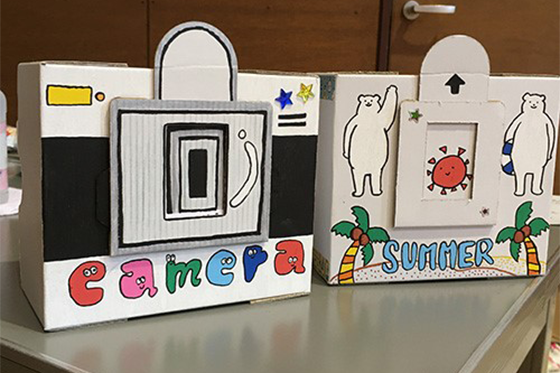
Cardboard pinhole camera kit using film for the instax™
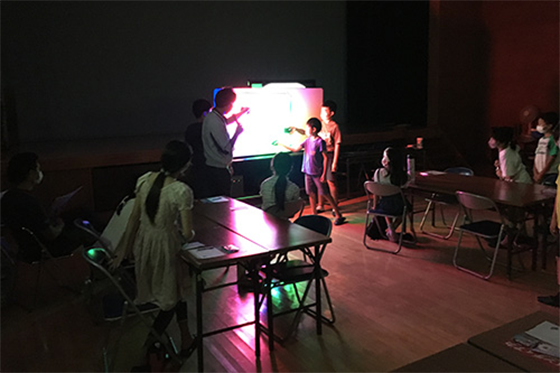
Employees explaining the primary colors of light to children during the explanation of the mechanics of photography.
Since our foundation, we have operated a Imaging business to “contribute to society by offering more informative images.”
The Fujifilm Group supports the documentation and preservation of valuable cultural properties and artworks.
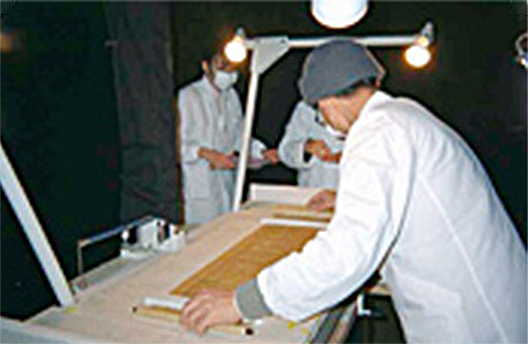
Since 1999, FUJIFILM Imaging Systems, which operates the Imaging Solutions business in Japan, has been collaborating with the Imperial Household Agency and MARUZEN Company (now MARUZEN-YUSHODO Company, Limited) to reproduce and preserve all 4,960 volumes of the “Shogozo Sutras” stored and kept by the Shosoin Office of the Imperial Household Agency. This project also involves publishing these volumes on DVD.
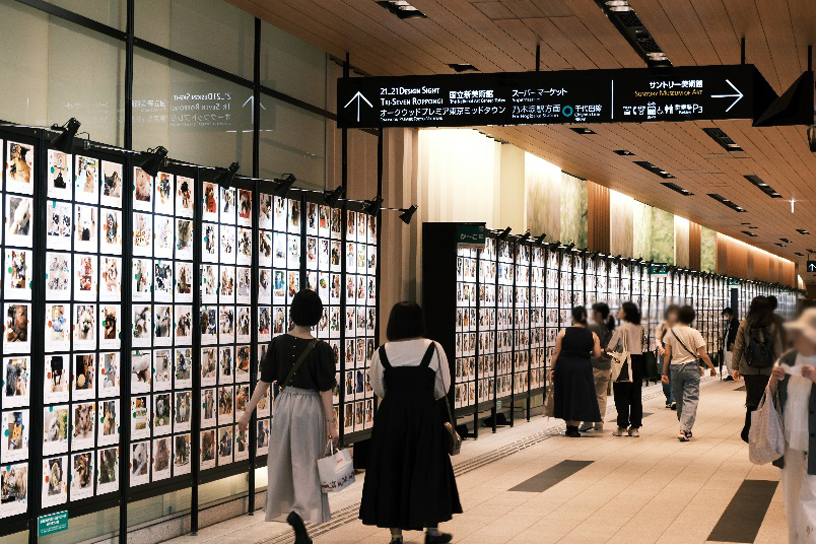
Since 2006, Fujifilm has been continuously holding a participatory photo exhibition that displays all the works of the exhibitors along with the “emotions captured in the photos.”
We aim to create a healthier society and further develop our healthcare business simultaneously. This will be achieved by promoting disease prevention, diagnosis, and treatment in emerging and other countries. In this way, we can drive forward our healthcare business, which offers medical products such as mammography systems, diagnostic imaging systems, and medicines.
Our target is improving access to medical services by using medical AI technologies to introduce our products and services to all 196 countries in the world by fiscal 2030.
As part of our unique activities rooted in our origins as a photography business, Fujifilm is engaged in restoration and recovery support activities for areas affected by natural disasters such as earthquakes and floods, including the “Photo Rescue Project.”
The Great East Japan Earthquake occurred on March 11, 2011 with its epicenter located off the Sanriku Coast. As a result of the powerful tsunami that ensued, many coastal cities in the Tohoku Region suffered severe damange, with houses and people’s belongings - photographs included - swept away by the waves. Fujifilm has been visting the affected areas, sharing technical information and providing supplies to support photo cleaning operations.
In recent years, the number of typhoon and heavy rain damages has significantly increased due to abnormal weather conditions, and each time, photo rescue activities are carried out in the affected areas. In these activities, not only is our shared know-how enhanced with new insights based on on-the-ground experiences, but also the spirit and collaboration with NPOs that participated during the Great East Japan Earthquake continue to be passed down.
In November 2024, FUJIFILM Imaging Systems, which operates the Imaging Solutions business in Japan, held an event titled “Happiness is a photograph: The Everlasting Frame Shop” in Wajima City, Ishikawa Prefecture, as a part of its recovery support activities for the Noto region, which was affected by earthquakes and heavy rain disasters. “Happiness is a photograph” is a project by the Fujifilm Group aimed at enhancing life happiness through “photography” and “photo printing”. This event, held as part of the project, was attended by approximately 20 disaster victims. Participants brought their cherished photos, and we listened to the emotions embedded in each photograph while proposing the most suitable photo frames and mounting them to create finished works. The event created many moments of smiles and happiness.
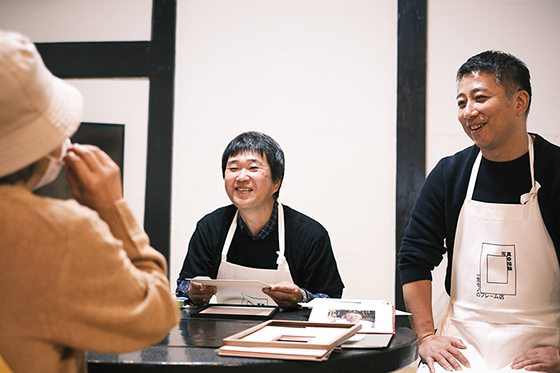
Employees proposing framing options while listening to participants’ stories as concierges
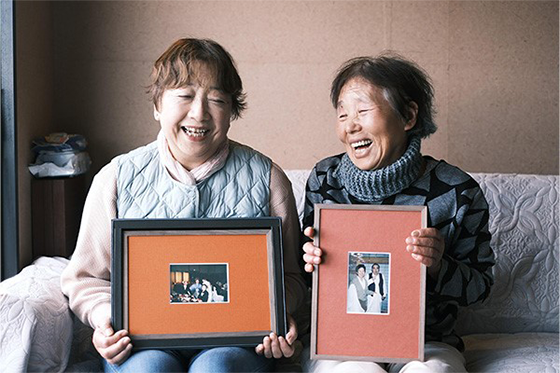
Two participants smiling as they select the color and size of the frames while conversing with a concierge, and finally receiving their framed photographs