






The content on this page is intended to healthcare professionals and equivalents.
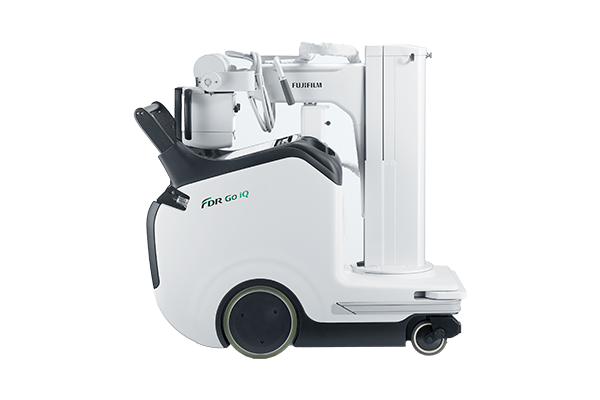
A full range of FDR D-EVO III series flat panel sensors are available. Multiple panels can be carried on the system simultaneously, providing flexibility and comprehensive support for any mobile imaging.
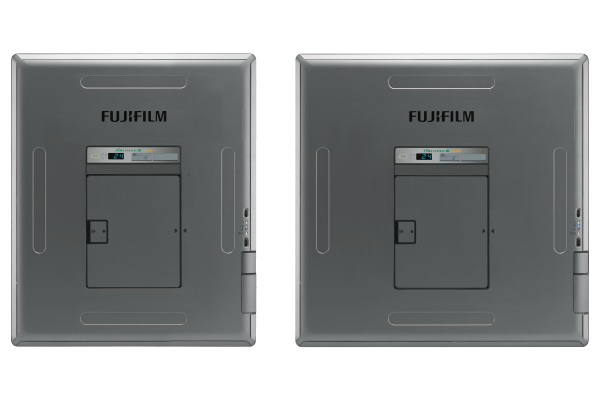
Like FDR D-EVO II, FDR-D-EVO III is Equipped with an indirect conversion system called the ISS method which bonds optical sensors (TFT) to the X-ray irradiation side unlike traditional flatpanel detectores. This greatly suppresses scattering and attenuation of X-ray signals, creating a sharp image with low X-ray dose.
Utilizing a glass free film based TFT with ISS technology, the FDR D-EVO III has improved levels of sensitivity (DQE), and Sharpness (MTF). FDR D-EVO III achieved DQE CsI: 58% / GOS: 33%(1Lp/mm-RQA5 1mR)by applying a flexible film to a base of the device detector. This technology combination is only possible with proprietary ISS technology to fully implement the benefits of film-based detectors.
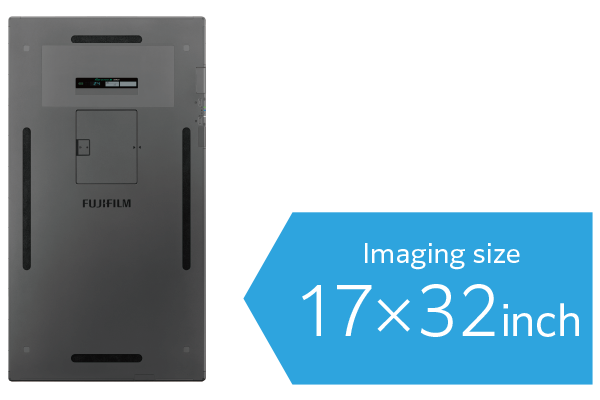
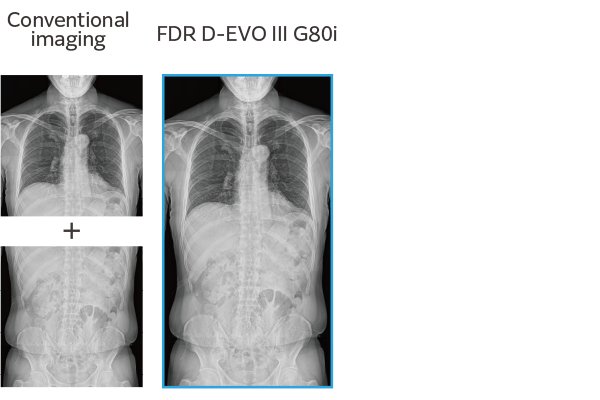
FDR D-EVO III G80i’s 16.7"×31.8" field of view simplifies positioning for a variety of patient and anatomy sizes. Workflow is enhanced by capturing the entire whole spine and other long views in a single exposure. Instant capture reduces chances for patient motion artifacts and retakes compared to multi exposure DR imaging.
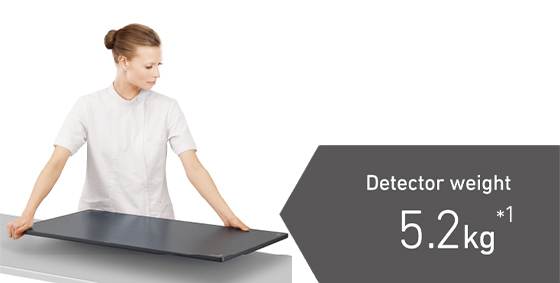
- *1 Excluding battery, ±10%
Lightweight, thin design allows easy handling and positioning. It designed lighter, more rugged, and less likely to get dropped. It can even utilize existing long- view CR cassette holders and stands. Its light portability and wireless battery operation also makes it easy to carry and move from room to room on demand.
The integrated workstation that follows the technology of Console Advance provides a comprehensive and consistent User Interface throughout the X-ray portfolio.
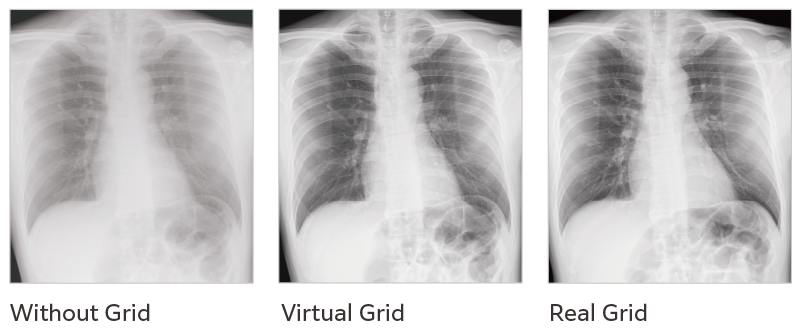
Virtual Grid processing corrects for the effects of scatter radiation. Without the need for a grid, Virtual Grid retains high contrast and image sharpness, while preventing the asymmetric density resulting from misalignment of X-ray tube and detector. (Option)
Advanced thickness and feature recognition algorithms automatically adjust contrast and density for individual characteristics of body parts and orthopedic hardware. (Option)
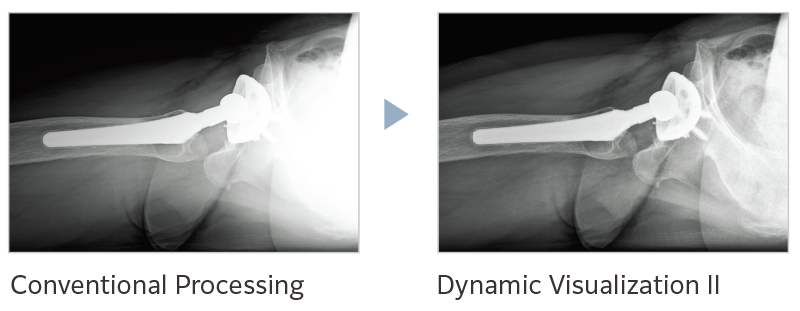
Our ability to capture sharper images at a lower dose, which we have enhanced over the course of many years as a cassette DR manufacturer, brings out the best of the DR system.
By integrating Fujifilm’s proprietary image processing technologies, the lightweight, compact imaging system can demonstrate easy-to-read images smoothly.
- *2 By comparison with our conventional images