


![[icon] Healthcare IT](https://asset.fujifilm.com/www/vn/files/2024-08/992aaf53ecc384870b2a3b59d9827b9c/healthcare-it.svg)
![[icon] X-ray](https://asset.fujifilm.com/www/vn/files/2024-08/6dc0184ac3d859e7323bc48a3d18a3c0/x-ray.svg)
![[icon] Ultrasound](https://asset.fujifilm.com/www/vn/files/2024-08/a478eb7f21feea18ec410b141756f977/ultrasound.svg)
![[icon] Endoscopy](https://asset.fujifilm.com/www/vn/files/2024-08/15a7c2544ee4666af44eb8bb0527d120/endoscopy.svg)
![[icon] In Vitro Diagnostics](https://asset.fujifilm.com/www/vn/files/2024-08/2bd30f9a138eb5dae65502332b3a016f/ivd.svg)
![[icon] Veterinary Medicine](https://asset.fujifilm.com/www/vn/files/2024-08/4d4d66b766ca6f3fb847391867330f19/veterinary.svg)
![[icon] MRI and CT](https://asset.fujifilm.com/www/vn/files/2024-08/5dd33ac71bdea3950b6f8ef7eda8efd1/mri-and-ct.svg)
![[icon] Testing and Measurement](https://asset.fujifilm.com/www/vn/files/2024-08/a7feaeccf9108e58a80bd26394afea5a/testing-and-measurement.svg)
![[icon] Inkjet Solutions](https://asset.fujifilm.com/www/vn/files/2024-08/83b15a2c89febec8019cca93e6f8c063/inkjet-solutions.svg)
![[icon] Office Solutions](https://asset.fujifilm.com/www/vn/files/2024-08/4a2ba1a161266cced64343a1d6057c1b/office.svg)
![[icon] Graphic Arts & Printing](https://asset.fujifilm.com/www/vn/files/2024-08/317f2ce2329dadbfcfbf5010894a2645/graphic.svg)
![[icon] Photofinishing Products](https://asset.fujifilm.com/www/vn/files/2024-08/1194c3f5b4984199976c0f12596e4d33/photofinishing.svg)
![[icon] Optical Devices](https://asset.fujifilm.com/www/vn/files/2024-08/851d6e97dfa0b42108c78b27978ffcc4/optical-devices.svg)
![[icon] Cine & Broadcast Products](https://asset.fujifilm.com/www/vn/files/2024-08/cfd769a8ec15dfda5f7439ebada6159e/film-and-broadcast.svg)
![[icon] Security Protections](https://asset.fujifilm.com/www/vn/files/2024-08/f05cbf4ebf5a071d10234f8066aa887b/security.svg)
![[icon] Manufacturing Process](https://asset.fujifilm.com/www/vn/files/2024-08/921eb81769eb6d629b4063588f29c475/manufacturing-process.svg)
![[icon] Inspectional Products](https://asset.fujifilm.com/www/vn/files/2024-08/33f84d5d890ed12be3a58b9ed5aee95e/inspection.svg)
![[icon] Data Management](https://asset.fujifilm.com/www/vn/files/2024-08/f0602b46ce675e6bb7fc145da76a7629/data-management.svg)
![[icon] Materials](https://asset.fujifilm.com/www/vn/files/2024-08/df32274a13a82a5600209860a845fe85/materials.svg)


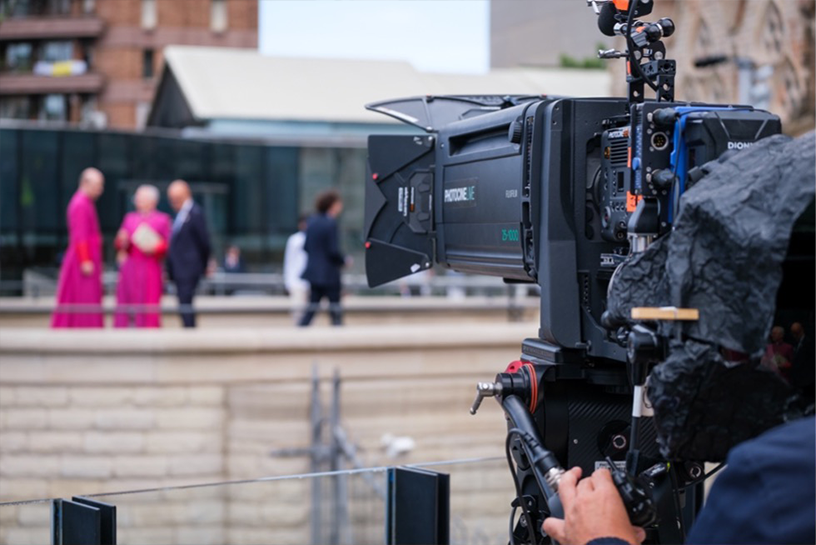
The historic production utilized Fujifilm’s “FUJINON Duvo Series lenses to seamlessly merge cinematic aesthetics with the high-stakes demands of live broadcasting.
By deploying a cutting-edge Cinema Live workflow, 3Cat delivered a globally distributed host signal, offering home audiences a remarkably immersive viewing experience.
©2026 Guillem Calatrava
In June 2026, Fujifilm collaborated with 3Cat (Corporació Catalana de Mitjans Audiovisuals) on a landmark audiovisual production: covering Pope Leo XIV’s historic visit to Barcelona for the official inauguration of the Sagrada Familia’s Torre Jesucristo (“Tower of Jesus Christ”). To capture the gravity and beauty of the ceremony, the production team deployed FUJINON Duvo Series lenses, translating high-end film language into a live broadcast environment.
As one of the main co-producers of the global broadcast, 3Cat took center stage during the definitive blessing of the Torre Jesucristo. Rather than replicating traditional broadcast models, 3Cat’s ambition was to forge a unique approach by harnessing the expressive narrative power of High Dynamic Range (HDR) and cinema-style depth of field, while fully maintaining the rigorous technical stability required for a live international event. It was a production designed to deliver the ultimate quality without any compromise.
This broadcast confirms the arrival of Cinema Live technology on a grand scale. The heart of the inauguration featured a breathtaking light and music spectacular envisioned by Catalan artistic director Igor Cortadellas. To do justice to his vision, the crew merged broadcast reliability with premium storytelling, offering home audiences an unprecedented level of visual immersion. Critically, because this event also marks a profound moment in history, occurring on the centenary of Antoni Gaudí’s death, the production was designed with long-term preservation in mind. To ensure this monumental archive remains timeless, the entire production was captured natively in stunning 4K resolution utilizing Super-35 sensors. This deliberate technical choice guarantees that the footage is thoroughly future-proofed for historical archives, retaining maximum detail and fidelity for generations to come, while giving contemporary viewers the feeling of being right there in the basilica.
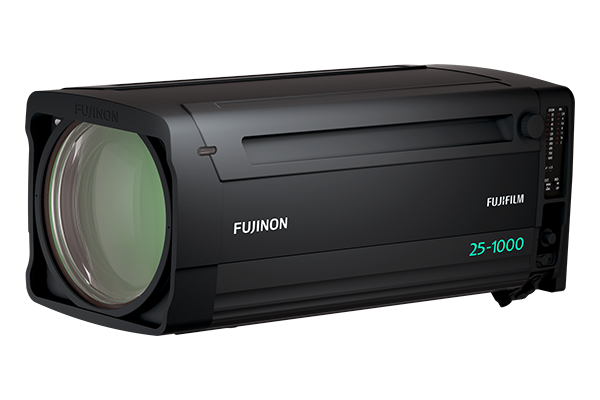
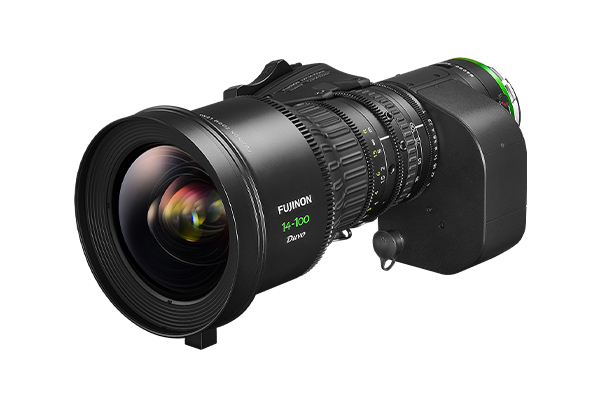
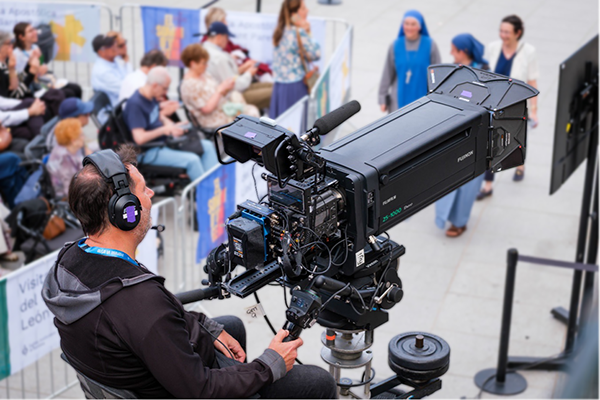
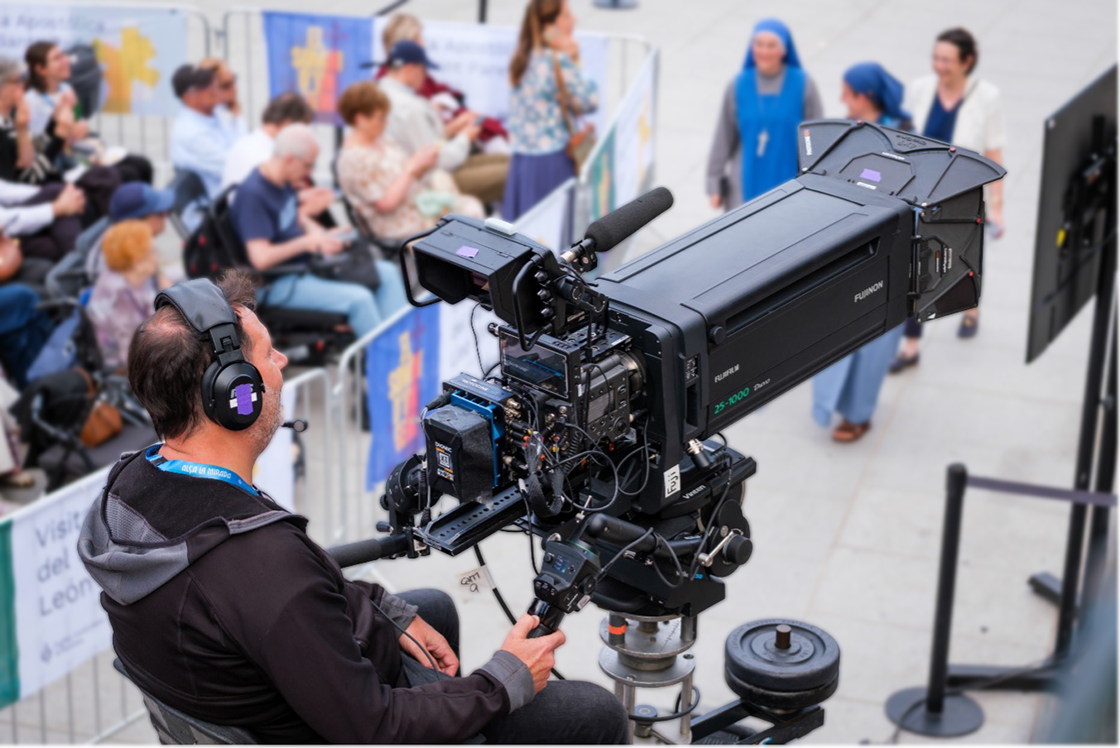
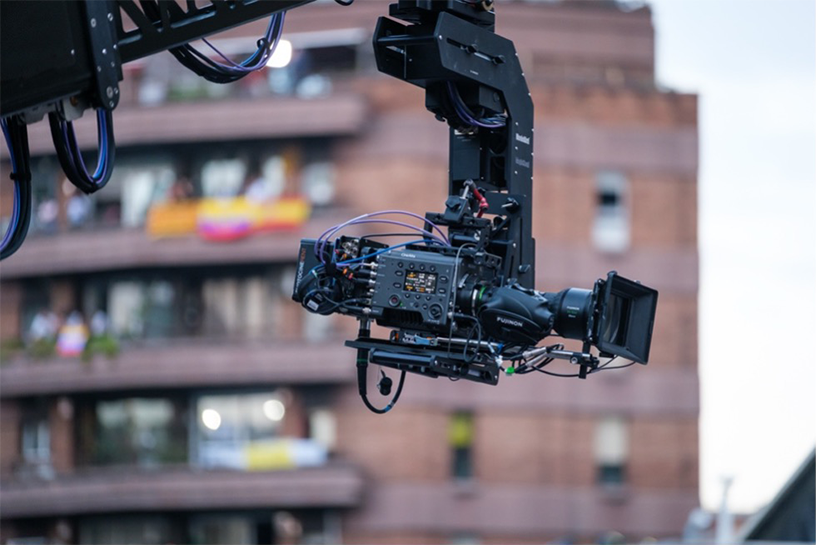
Led by 3Cat’s Head of Imaging and Director, Paulí Subirà Claramunt, the crew masterfully orchestrated a complex technical layout. The multi-camera environment featured a fleet of seven heavy-duty “FUJINON HZK25-1000mm” box lenses alongside three compact “FUJINON HZK14-100mm” portable zoom lenses. Instead of the flat look typical of standard broadcast cameras, this combination allowed the directors to achieve a shallow depth of field with beautiful soft backgrounds. This rich texture elevates the emotion of the event, drawing the audience directly into the sacred space. Furthermore, the lightweight versatility of the portable optics allowed for dynamic movement, whether mounted on tripods, carried on operators' shoulders, balanced on Steadicams, or soaring on cranes for sweeping wide-angle shots of the architecture. "The Fujifilm equipment delivers exceptional operability, versatility, and ease of integration into a highly complex technical ecosystem," noted Héctor Sole-Bradshaw Beltran, Project Manager & Production Technical Manager at 3Cat Corporation. "This collaboration with 3Cat reflects Fujifilm’s commitment and capability to support massive, prestigious audiovisual coverages in globally iconic settings like the Sagrada Familia," stated Santiago Sanz García, Optical Spain & Recording Media Iberia Manager at Fujifilm Spain. "This project is an immense point of pride for our team. It demonstrates how our technology can completely transform the live viewing experience, bringing precision, premium quality, and a aesthetic that connects global audiences deeply to moments of historical significance."
©2026 Guillem Calatrava
©2026 Guillem Calatrava